AI Hopes
· 4 min read
Wishful Thinking Over Hard Choices
My original hypothesis for the hype around AI was that the hype was less about the potential for revolutionizing the economy and more about the wish that it would. The complex dynamics of all the players here manifests as a type of societal wishful thinking. On the individual person or interest group level, the story is most likely different.
My confidence in the hypothesis increased greatly reading The Rise and Fall of American Growth by Robert Gordon. The level of growth that America had from 1870-1970, the so called "great" years of America, were largely due to once in a lifetime innovations and government policies. Innovations include electricity, the internal combustion engine, the telephone, and clean running water, and policies such as the Morrill Act, social security, workers compensation, and the creation of agencies like the FDA.
Since then, there have not been any revolutions in terms of technology or policy. Rather, we are in an age of evolution, innovation, and incremental changes. We face significant headwinds in the form of income inequality, debt, medical spending, and educational gaps. Gordon then outlines areas he sees as significant drags on growth, whether due to the presense or absence of government policies.
Gordon is thus a techno-pessimist when it comes to "Industrial revolution #3". The book was written before the current AI era. But, I would say that Gordon, if he has not written already, would extend his thesis. Electricity and the internal combustion engine revolutionized so many areas of life that in productivity but also quality of life, that the internet still pales in comparison. The internet did significantly transform areas like entertainment and information, but that is much narrower than the impact of electricity and the internal combustion engine.
The AI revolution is further revolutionizing a subset of that subset. Areas like software engineering, finance, etc., primarily white collar, knowlege worker jobs that are already at the forefront of the third industrial revolution are being disrupted again. But even among the area it is most amenable to, software engineering, the new transformer architecture LLMs are going to look like an incremental change as well. This might mean that it will take years if not decades to see it impact the wider knowledge worker economy, and a much longer timeline for it to impact areas like healthcare, education, defense spending, industrial jobs, etc.
We see this in the continuing anxiety around money in and money out. OpenAI will most likely burst at some point, get picked up by Microsoft. The most likely place ChatGPT ends up as is a competitor to Google as your entrypoint into the internet and thus a place to be served ads. But Google, Claude, Perplexity/Comet, etc., will all eat into that market share.
The wishful thinking around AI is that it would allow us to kick the can down the road and outgrow making hard choices. The American economy is incredibly good at throwing capital at problems and scaling products, distribution, etc. So when we have papers published like the scaling laws paper that felt like we could throw money, data, electricity, infrastructure, and compute at a problem and once we got enough of it we would hit some magical escape velocity of artificial IQ in LLMs to jumpstart the growth of the economy.
It is unlikely this is happening and will happen. If anything, we might experience a period of slower growth before we stabilize and LLMs reach some sort of niche product market fit for knowledge workers. The compute, electricity, the data, and access to cheap capital are increasingly adding friction this fantasy.
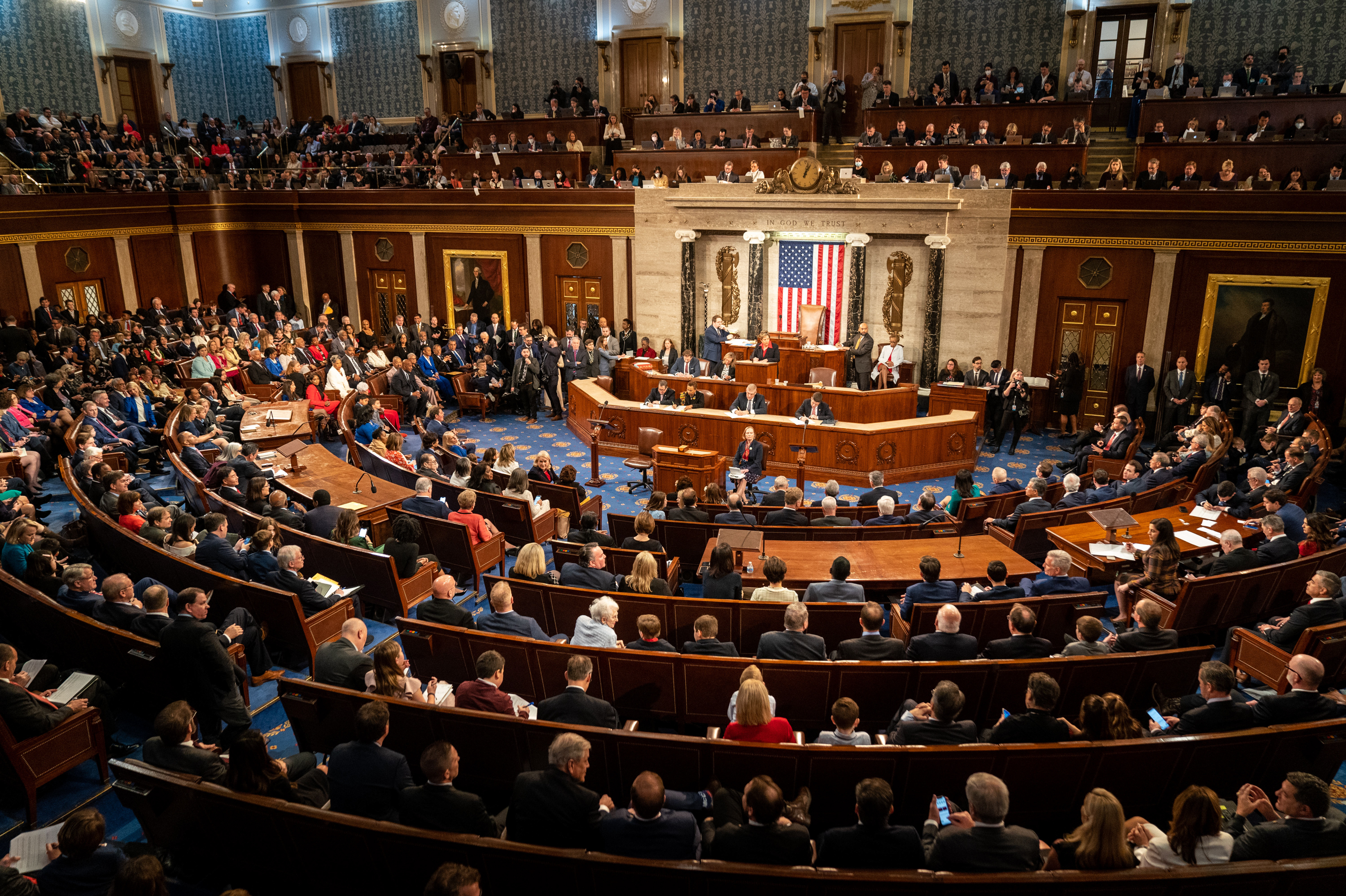
Instead, we might have to make some hard choices, but our government might be too weak and incapable of doing this. There is an age old question when it comes to evaluating the success of a company, was it that they had incredible tailwinds, product dominance, and other external factors that made it impossible for the company to not succeed, or was it that the company was incredibly good at operating, organizing, leading, using capital, and making decisions? Robert Gordon's work suggests that for the U.S. government of the last 50 years, it was the former.
Our government could ride along the tailwinds of the second industrial revolution and policy innovations of the Great Leap era. But when it comes to maintaining that success and level of growth, all the major economic indicators are pointing downwards. The only two levers that the two parties have pulled it feels like are subsidizing things, raising taxes, or cutting taxes. In a targeted way, these can work, but as the only levers, they are not enough.
The only lasting change is going to be with reshaping government policy through congress. But congress is less interested in governing than ever, and more and more both parties are pushing for the executive branch to have more power, even if it is short term and is overruled in the next election. If you don't get ahead of these economic trends, you will have less and worse options as the situation gets worse. The inaction of congress will end up backing America into a corner where the only option is where are you going to get punched the least hardest.