3. Sketch of the Analytical Engine

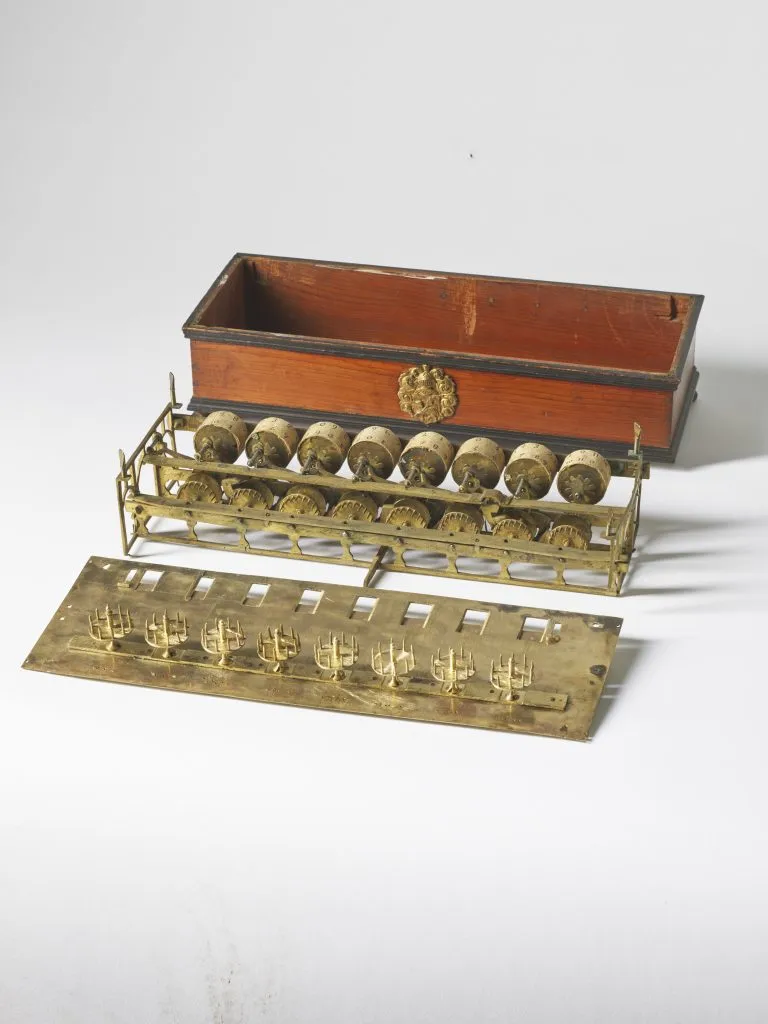
The Pascaline is briefly mentioned here, but is worth talking about briefly. In terms of engineering ability, this is novel and impressive. Pascal's father was a tax official in France and would regularly do large calculations. The Pascaline, although not a computer, is still an abstraction that works. Mainly, it could keep track automatically of carries, which are a large source of errors. It also reduced all calculations to addition for ease of implementation, as you can do the others through addition.
But Babbage/Lovelace (shortened to Lovelace for the remainder, as her writings is the text here) remarked on the real issue is the need for human intervention at all for doing calculations.
The chief drawback hitherto on most of such machines is, that they require the continual intervention of a human agent to regulate their movements, and thence arises a source of errors; so that, if there use has not become general for large numerical calculations, it is because they have not in fact resolved the double problem with the question presents, that of correctness in the results, united with economy of time.
Not only does this seem to be the problem with computing work, but a big problem with LLM work. The training rounds are so time and compute expensive, there is a huge boon for any company that can automate the building of LLMs. This goes back to the Wait but Why post I believe, but the idea that we can build computers that build computers that build computers, the double reflexivity here necessary. We have computers that build computers, but not the final layer, if possible.
Another early influence was the Jacquard loom, which allowed you to essentially program the threading of a loom to create complex textiles an a more automated fashion.
There are better summaries to explain how it works, but it is impressive how the basics of a computer, such as the CPU, memory, instructions, I/O were present in this machine. What does interest me is some of the early reflections on what it means to compute and to be intelligent.
Thus, although it is not itself the being that reflects, it may yet be considered as the being which executes the conceptions of intelligence.
It is hard to see how this is still not true today. Just as a computer is essentially logical operations in circuits, the LLMs are essentially matrix math operations on top of these. The LLM is trained on human data and executes human "conceptions of intelligence", there is nothing autonomous about this.
Author: L. F. Menabrea, with notes by Ada Augusta, Countess of Lovelace
Original date: 1843
Back to Ideas That Created the Future